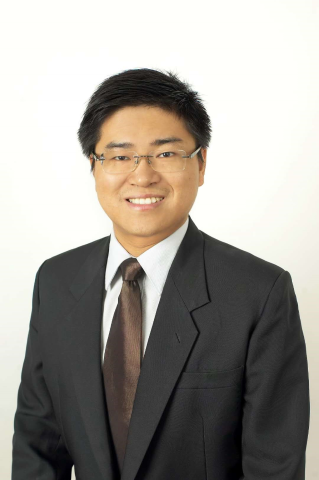
| Prof. Chao LUThe Hong Kong Polytechnic University, China Chao LU obtained his BEng in Electronic Engineering from Tsinghua University, China in 1985, and his MSc and PhD from University of Manchester in 1987 and 1990 respectively. He joined the School of Electrical and Electronic Engineering, Nanyang Technological University(NTU), Singapore as a faculty member in 1991 and was there until 2006. From June 2002 to December 2005, he was seconded to the Institute for Infocomm Research, Agency for Science, Technology and Research (A*STAR), Singapore, as Program Director and Department Manager leading a research group in the area of optical communication and fibre devices. He joined the Hong Kong Polytechnic University in 2006 and is currently Chair Professor of Fibre Optics and director of the Photonics Research Institute there. His research interests are in the area of high capacity transmission techniques for long haul and short reach systems and distributed optical sensing systems. In addition to academic research work, he has had many industrial collaborative research projects and has a number of awarded patents. His current research interests are in the area of high capacity transmission techniques for long haul and short reach systems and distributed optical sensing systems. He is a fellow of the Optical Society(OPTICA/OSA). Speech Title: Integrated Optical Communication and Sensing : Techniques and Applications Abstract: In recent decades, a comprehensive network of land-based and underwater optical communication fibers has been established to meet the global demand for connectivity. Lately, there has been increasing interest in using this existing infrastructure for environmental sensing to monitor changes in the physical environment. This interest is fueled by two primary factors: the widespread geographic coverage of optical communication fibers and their high sensitivity to optical detection, which together offer a range of previously unattainable sensing capabilities. These capabilities include the development of extensive networks for monitoring seismic activity, transportation systems, and more. Additionally, integrating sensing functions can greatly improve the reliability of the current optical network. Since a single optical fiber link can transmit hundreds of terabits or even petabits of data per second, any disruption can result in significant data loss. Many such disruptions are caused by unauthorized digging, wind, and other factors. Early detection of these disturbances can enable preventative measures to reduce data loss. In this presentation, we will explore recent advancements in combining optical communication and sensing technologies and discuss some application examples. |

| Prof. Changyuan YuThe Hong Kong Polytechnic University, China Prof. Changyuan YU received his Ph.D. in Electrical Engineering from the University of Southern California, USA in 2005. He was a visiting researcher at NEC Labs America in Princeton, USA in 2005. He then joined the faculty of National University of Singapore (NUS), where he served as the founding leader of Photonic System Research Group in Department of Electrical and Computer Engineering till 2015. He was also a joint senior scientist with Institute for Infocomm Research (I2R), Agency for Science, Technology and Research (A*STAR) in Singapore in this period. And he was a visiting professor with Department of Electrical and Electronic Engineering, University of Melbourne, Australia in 2007. In 12/2015, he joined the faculty of The Hong Kong Polytechnic University, where he is now the Chair Professor of Photonic Information System in Department of Electrical and Electronic Engineering, while he also continues as an adjunct faculty member of NUS. His research focuses on photonic devices, subsystems, optical fiber communication and sensor systems, and biomedical instruments. He has supervised 20+ postdocs and 40+ PhD students and co-authored 10+ patents, 7 book chapters, and 700+ journal/conference papers (100+ keynote/invited, including OFC in USA) with 12000+ citations and H-index=47. He served in organizing or technical program committees for 100+ international conferences, and Telecommunications Standards Advisory Committee for Singapore government. His group has several spin-off companies and won 16 best paper awards in conferences, BOCHK Science and Technology Innovation Prize (Advanced Manufacturing) in 2026, Gold Medal and Special Merit Award at the International Exhibition of Inventions of Geneva in 2026, Gold Awards in the Hong Kong Techathon+ Innovation Competition in 2025 & 2026, the 1st Prize of Technological Invention Award in Guangdong Province in 2020, and the National Championship (Biomedical Area) in the 3rd China Innovation and Entrepreneurship Competition in 2014. He is an Optica/OSA fellow. Speech Title:Research and application of photonic information systems Abstract:Photonic information systems (optical communication, optical sensing, optical imaging, etc.) play a key role in today's "information age", including artificial intelligence. "The 21st century will depend on photonics as much as it did on electronics in the 20th century." This talk will introduce our cutting-edge research and commercialization efforts of photonic information systems, including long-distance optical fiber transmission systems as the backbone of the Internet, short-range optical interconnection in artificial intelligence data centers, vital sign monitoring systems based on optical fiber sensing, and meta-device imaging and laser systems. |
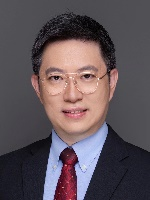
| Prof. Deyuan SHENJiangsu Normal University, China Professor, National High-Level Talent Program and CAS Hundred Talents Program awardee. Director of Jiangsu Advanced Laser Technology and Emerging Industry Collaborative Innovation Center. Former faculty/researcher at the University of Electro-Communications (Japan), Nanyang Technological University (Singapore), University of Southampton (UK), and Fudan University. Research focuses on mid-infrared solid-state and fiber lasers and their applications. Author of two monographs including Mid-Infrared Lasers, holder of 30+ authorized patents, and author of 200+ papers with 10,000+ citations. PI of 10+ major projects including NSFC key programs and defense initiatives. Editor of Optics Express and Editorial Board Member of Acta Optica Sinica. Member of Laser Professional Committee, Chinese Optical Society; Vice Chairman of Jiangsu Provincial Enterprise R&D Institution Promotion Association. Speech Title:Research Progress on Erbium-Doped Sesquioxide Ceramic Lasers Abstract:Mid-infrared lasers operating at ~3.0 μm have significant applications in biomedicine, national defense, and security fields. However, the "self-termination" phenomenon associated with this spectral transition poses a major bottleneck limiting power scaling. To overcome self-termination, conventional approaches such as high-concentration doping or co-doping with sensitizer ions inevitably exacerbate heat deposition in the gain medium. Sesquioxide laser gain media feature low maximum phonon energy, high density of substitutable cation sites, and strong ion–ion interactions, which collectively render them promising candidates for circumventing laser self-termination even in lightly doped systems. This report provides a comprehensive review of the current status and recent advances in ~3.0 μm laser research, with a particular focus on the latest progress in Er³⁺-doped sesquioxide ceramic lasers. A systematic investigation of laser performance in 0.5 at.%–11 at.% Er³⁺-doped Y₂O₃ ceramics is presented. Notably, room-temperature slope efficiencies comparable to those of 7 at.% and 11 at.% doped samples were achieved with a 3 at.% doped sample, and continuous-wave laser oscillation was successfully realized even at a doping concentration as low as 0.5 at.%, demonstrating the significant potential for power scaling in this material system. |

| Prof. Han ZhangShenzhen University, China Professor Zhang Han is a Distinguished Professor at the College of Physics and Optoelectronic Engineering, Shenzhen University, and has achieved outstanding results in the field of ultrafast laser technology and its applications. He received his Ph.D. from Nanyang Technological University in Singapore, conducted postdoctoral research at the Université libre de Bruxelles in Belgium, and previously held a faculty position at Hunan University before joining Shenzhen University in 2013. His research focuses primarily on ultrafast laser sources (developing high-power, broadband femtosecond/attosecond pulsed lasers), ultrafast laser computing (developing efficient photonic computing architectures combined with machine learning), and ultrafast laser therapy (exploring precision applications in ophthalmology, tumor ablation, and other medical fields). Professor Zhang was selected for the "Thousand Young Talents Program" of the Organization Department of the CPC Central Committee and received the "Excellent Young Scientist Fund" from the National Natural Science Foundation of China (NSFC). He has been honored with multiple awards, including the Guangdong Provincial Youth Science and Technology Award, the Guangdong Provincial May Fourth Youth Medal, the Guangdong Provincial Ding Ying Science and Technology Award, and the Shenzhen Youth Science and Technology Award. His research achievements have also earned him several prizes, including the First Prize of Guangdong Provincial Natural Science Award, the First Prize of Guangxi Technological Invention Award, the First Prize of Shenzhen Natural Science Award, and the Second Prize of the Ministry of Education Natural Science Award. He has led a number of major national, provincial, and municipal research projects, including the National Key Research and Development Program of China, key projects of the NSFC, the Guangdong Provincial Basic and Applied Basic Research Major Project (Cornerstone Program), and the Shenzhen Peacock Team Project. He is recognized as a leading scholar in ultrafast optics with capabilities in both theoretical innovation and industrial application. Speech Title: Ultrafast Lasers and Photonic Intelligent Computing Abstract: In the post-Moore era, photonic intelligent computing has emerged as a key direction to break through the bottlenecks of electroni, leveraging advantages such as low power consumption, high bandwidth, and high parallelism. As the core physical carrier, ultrafast lasers not only provide ultrafast pulse sources for optical computalso empower photonic systems to achieve intelligent information processing through unique light-matter interactions, driving a paradigm shift from electronic-driven to photonic computing. This report focuses on three core advancemeof ultrafast lasers in photonic intelligent computing: 1) "Self-learning" ultrafast photonic intelligence, inspired by Pavlovian conditioning, has developed an autonomous optical domainhat requires no electronic involvement or traditional algorithm training, achieving a breakthrough from passive response to active cognition and laying the physical foundation for all-optical autonomous intelligent hardware;sing-Storage-Computing integrated ultrafast photonic intelligence, addressing the needs of edge computing and real-time sensing, utilizes ultrafast laser technology to eliminate energy consumption and latency bottleneckociated with optoelectronic conversion, integrating computing, storage, and display functions on-chip to significantly enhance system parallel processing speed and overall energy efficiency; 3) Ultrafotonic Logic Processing Unit (LPU), integrating ultrafast laser sources with nonlinear Kerr devices, constructs a self-consistent and scalable photonic LPU, forming a new computing module that orates heterogeneously with existing CPUs/GPUs, driving the evolution of computing architectures from electronic Boolean logic to photonic native intelligence. These achievements fully demonstrate that ultrafast lae not merely physical tools for high-speed optical manipulation but also a key enabling technology for unleashing the intrinsic intelligence of photons and building next-generation computing. |