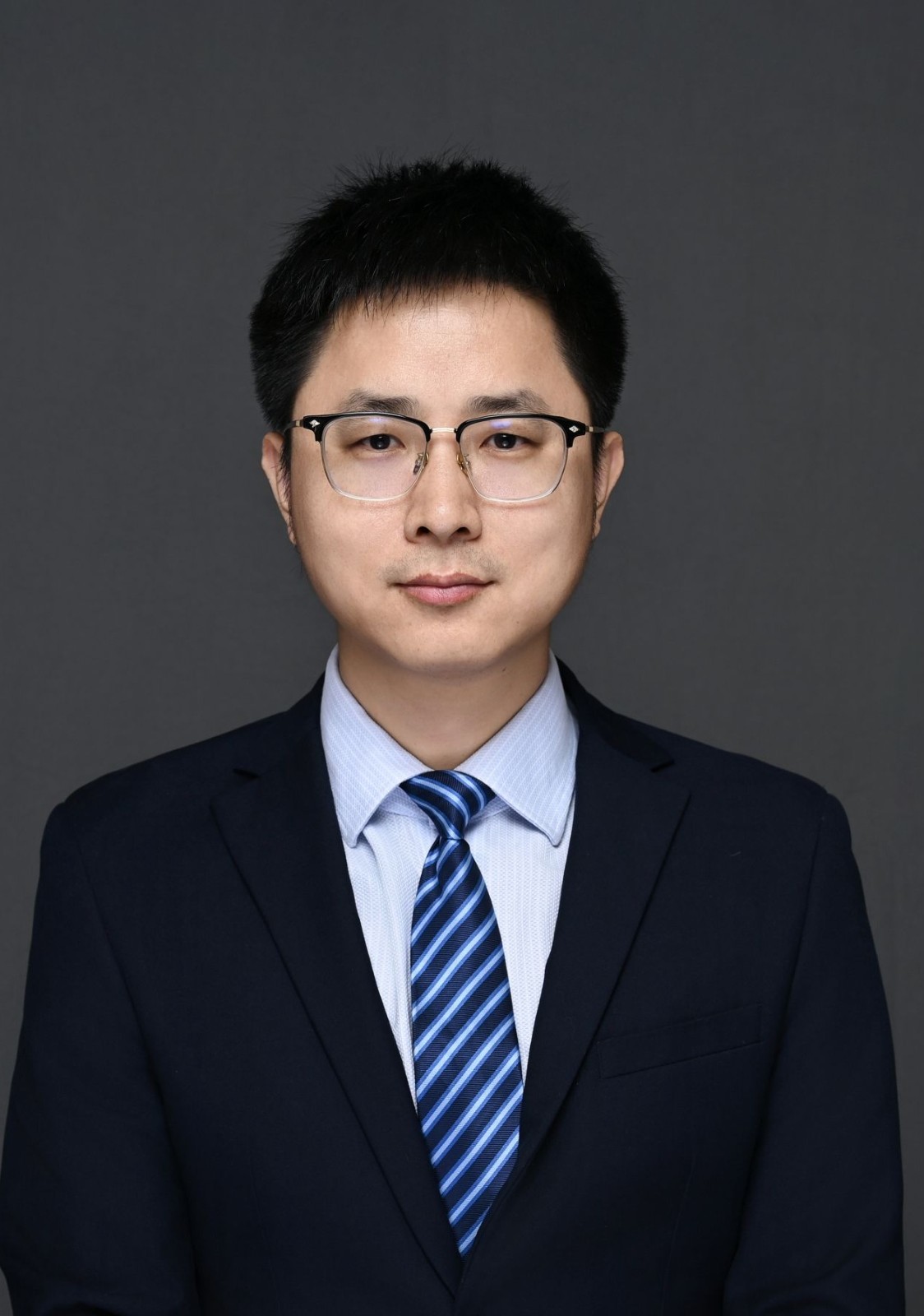
| Prof. Kaiwei LiJilin University, China Kaiwei Li is a Professor at the Key Laboratory of Bionic Engineering (Ministry of Education), Jilin University. He earned his B.E. from Jilin University in 2009 and his Ph.D. from the Changchun Institute of Optics, Fine Mechanics and Physics, Chinese Academy of Sciences, in 2014. He was a Research Fellow at Nanyang Technological University, Singapore (2015-2018) and served as an Associate Professor at the Institute of Photonics Technology, Jinan University (2019-2021). His work focuses on the intersection of bio-inspired tactile sensing, specialty optical fiber technology, and the development of multi-material multifunctional fibers. He has published over 130 journal papers with a Google Scholar H-index of 42 and has been consistently ranked among the World’s Top 2% Scientists by Stanford University for the past three consecutive years. Speech Title: Stress-Modulated Self-Assembled Microstructured Multimaterial Polymer Optical Fibers Abstract: Developing stretchable waveguides with high sensitivity and mechanical compliance is crucial for wearable photonics. Here, we report Stress-Modulated Self-Assembled Microstructured Multimaterial Polymer Optical Fibers (SMM-POFs) that undergo spontaneous structural evolution via controlled mechanical instability. By leveraging the modulus mismatch between a rigid core and an elastic cladding, a "stretch-release" strategy programs fibers into wavy or 3D-helical architectures based on core eccentricity. These SMM-POFs exhibit exceptional stretchability and function as high-performance dual-mode sensors for both tactile pressure and tensile strain. The induced geometric nonlinearity significantly enhances sensing sensitivity and mechanical robustness compared to linear fibers. This work offers a versatile paradigm for wearable sensing in robotics, healthcare, and human-machine interaction. |

| Prof. Bin ZhangSun Yat-sen University , China Professor, Doctoral Supervisor, recipient of the Guangdong Natural Science Fund for Distinguished Young Scholars. His research focuses on silicon-based heterogeneously integrated photonic devices, with particular emphasis on the development of optoelectronic integration materials and devices for next-generation information processing, and their applications in optical interconnection, optical sensing, and optical power transmission. Over the past five years, he has led more than 10 projects funded by the National Natural Science Foundation of China, as well as provincial and municipal science foundations, with a total funding exceeding 15 million RMB. He has published over 70 SCI-indexed papers in prestigious international journals including Nature Communications, Nano Letters, and Laser & Photonics Reviews, has been granted 17 invention patents, and has delivered more than 30 invited talks at international and domestic academic conferences. His current research directions include: ultra-narrow-linewidth integrated lasers, high-speed optical engine modules (light source + modulator), key devices and systems for simultaneous lightwave information and power transmission (SLIPT), high-speed CVQKD chips and communication systems, and heterogeneously integrated photonic chips on chalcogenide glass/silicon carbide/lithium niobate platforms. Speech Title: TBD Abstract:TBD |
| Prof. Jie MaJiangsu Normal University , China Ma Jie, Professor, Deputy Director of the Jiangsu Key Laboratory of Advanced Laser Materials and Devices. He received his B.S. from Shandong University in 2007 and his Ph.D. in Physics from Shanghai Jiao Tong University in 2013. He was a postdoctoral fellow at the National University of Singapore and Nanyang Technological University from 2014 to 2018. His research interests include ultrashort pulse laser generation, high-power thin-disk laser technology, and novel laser devices. He has authored/co-authored over 50 SCI papers and serves as the Principal Investigator for research grants from the National Key R&D Program of China and the National Natural Science Foundation of China. Speech Title: TBD Abstract:High-power thin-disk lasers have attracted considerable attention in industrial processing and scientific research owing to their excellent heat dissipation capability and superior beam quality. In recent years, sesquioxide materials have been regarded as promising gain media for next-generation high-power and high-energy ultrashort-pulse lasers because they offer higher thermal conductivity, lower maximum phonon energy, and broader emission bandwidths than conventional Yb:YAG. Based on the high-quality Yb:Y₂O₃ transparent ceramic gain media fabricated by our group, we investigated key enabling technologies for thin-disk lasers, successfully fabricated high-quality thin-disk gain modules, and experimentally evaluated their laser performance. As a result, we achieved the first kilowatt-level continuous-wave operation of a Yb:Y₂O₃ ceramic thin-disk laser and demonstrated the highest optical-to-optical efficiency reported to date for sesquioxide ceramic thin-disk lasers. |

| Assoc. Prof. Xintong XuShenzhen Technology University, China Associate Professor Xu Xintong, male, Ph.D., serves as the Party Branch Secretary of the School of Integrated Circuits and Optoelectronic Chips at Shenzhen Technology University, is a Master's Supervisor, and has been recognized as a Shenzhen Reserve-Level Talent. He has long been engaged in the research and integration of novel optoelectronic devices, nonlinear photonic devices, ultrafast laser technology, and novel optoelectronic materials. He has led and completed multiple projects at the national, provincial, and municipal levels, published over 40 research papers, been granted 5 national invention patents, and contributed as a co-author to the book Mid-Infrared Optical Materials and Application Technology. He teaches a wide range of courses, including Semiconductor Physics and Devices, Semiconductor Materials and Devices, Laser Technology and Principles, Novel Fiber Lasers, Fundamentals of Carbon Materials, and Crystallography. Students who are interested are welcome to join his research group. Research Areas: Novel optoelectronic devices, nonlinear photonic devices, ultrafast laser technology, and the development and integration of novel optoelectronic materials. Speech Title: TBD Abstract:TBD |